
Blog · For parents
Animal sound videos for toddlers: what makes a good one
“What does the cow say” is one of the first questions a child can both understand and answer. That makes it unusually valuable screen time.
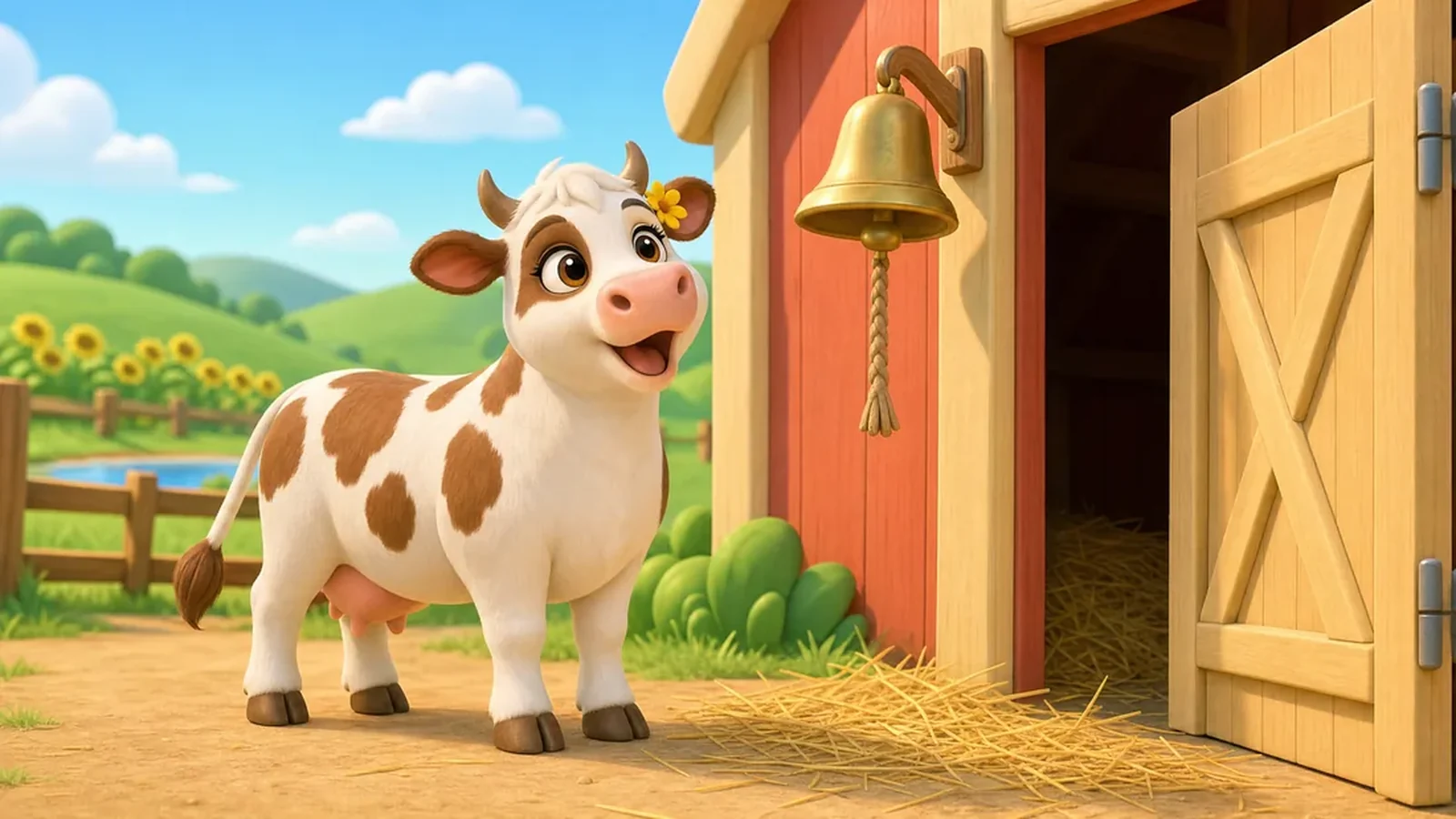
Short answer. A good animal sound video shows the animal clearly, plays one sound at a time, and leaves a pause for the child to answer before revealing it. Avoid rapid montages with a dozen animals a minute — the pause is what turns watching into speaking.
Why this format punches above its weight
Animal sounds sit at the exact point where a toddler's abilities meet. The sounds are simple to produce, the meaning is concrete, and the child gets an immediate result when they try. That loop — see, hear, attempt, be understood — is most of what early vocabulary building is.
It also transfers off the screen better than almost any other format. A child who learns “moo” uses it in the bath, in a book and at the window of a car.
The one feature that separates good from filler
The pause. A video that asks “who makes this sound?” and then waits two or three seconds turns a passive minute into a speaking one. A video that names the animal immediately gives the child nothing to do.
The second feature is one sound at a time. Rapid montages that cycle through twelve animals a minute look energetic but leave no room to respond.
What to look for
- The animal is on screen while its sound plays — not before, not after.
- A clear pause after the question.
- Real or convincing sounds rather than a synth approximation.
- Repetition across the episode, so the same animal comes back.
- A small cast. Six animals learned beats twenty animals shown.
Where to find them
Super Simple Songs covers this well in song form, and several nature channels offer real-footage animal sounds, which have the advantage of being true to life. Story-led versions are rarer, because building a pause into a narrative is harder than listing.
Tibino Kids is one of them: calm 3D farm stories for ages 2–6, cut at six to twelve seconds per shot, with no villains, no jump scares and no cliffhangers. Its guessing episodes are built around exactly this shape: the sound comes first, then the question, then a deliberate silence, and only then the animal.
Guessing beats naming, and hiding beats guessing
The strongest version of this format is a guessing game. “Guess the farm animal sound” is one of the most searched phrasings parents use, and the reason it works is structural: a question has to be answered, whereas a label can be watched. The moment a video asks rather than tells, the child has a job.
Hiding the animal adds one more thing on top. If the cow is visible while it moos, the child is matching a picture to a noise — useful, but easy. If the cow is behind the hay and only the sound comes out, the child has to identify it by ear alone before the picture confirms it. That is a genuinely harder skill, and it is the one that carries over to a room, a garden or a book.
The catch is that a hidden-animal video only works if the reveal actually comes. A guess left unanswered frustrates a two-year-old rather than teaching them, so the format needs a reliable rhythm: sound, question, silence, reveal — and then the same shape again, so the child can predict when their turn arrives.
Our episode Farm Hide and Seek runs that round twelve times without varying it. Every animal is out of sight when it makes its sound, every one steps out and gives its own name afterwards, and the smallest ones are placed so they take longer to hear.
After the first six: sounds that sit close together
The advice above — a small cast, repeated — is right for a child still collecting sounds. Once cow, pig, sheep, duck, horse and chicken are secure, a longer list stops being noise and becomes useful, as long as it is built on contrasts rather than novelty.
The interesting pairs are the ones that are nearly the same. A calf does not moo like its mother; it makes a shorter, higher sound. A pony's neigh is smaller than a horse's, and a donkey does not neigh at all. A goose honks where a duck quacks. Hearing two almost-matching sounds one after the other asks a child to listen for the difference — a finer skill than recognising a sound they have never heard before.
Our episode Old MacDonald's Animal Sounds is built that way. Tibino walks the farm and asks the same question at every stop — who says moo, who says oink — then leaves a gap before the animal answers. More than twenty animals appear, and the close relatives follow one another: the horse, then the smaller pony, then the donkey; and later Otto the calf with his little “mah”. Only Tibino speaks. The animals answer in sound alone.
With that many animals it is more than a beginner needs. For a child who already knows the basics, that is the point; for one who does not, stopping after the horses is a perfectly good way to watch it.
A test for whether it landed
There is a simple way to tell whether a child has actually mapped sounds to animals rather than just enjoyed the noise: give them a wrong one and see if they laugh. Mismatched sounds are only funny to someone who knows the right answer.
Our episode Pip Loses His Chirp is built on that joke. Pip the chick wakes up with no voice, and his friends lend him theirs one after another — so a tiny yellow chick moos like a cow, then oinks, then quacks. None of it fits, which is the whole point.
A child who giggles at a chick mooing has done the harder half of the learning already. One who watches it flatly is still at the stage of collecting sounds, and the plain naming format is the better fit for a while longer.
Frequently asked
At what age do children learn animal sounds?
Most children begin producing animal sounds between about 12 and 18 months, often before the animal's actual name. They are easy to say and get a strong reaction, which is why they tend to arrive early.
Are animal sound videos actually educational?
They can be, when they leave room for the child to respond. The learning comes from attempting the sound, not from hearing it. A video that pauses and waits is doing something a rapid montage is not.
Real animals or cartoons — which is better?
Both work. Real footage is truer to life and helps with recognising actual animals; cartoons can be clearer and less startling for very young children. Many families use both.
How long should an animal sound video be?
Short. Two to five minutes with six or so animals, repeated, does more than a twenty-minute compilation. Repetition of a small set beats coverage of a large one at this age.
Is a guessing game better than a video that just names the animals?
For a child who already knows a few sounds, yes. A guessing format hides the animal and asks first, so the child has to identify it by ear before the picture confirms it — a harder step than matching a sound to an animal already on screen. For a child still collecting their first sounds, plain naming is the better fit, because there is nothing yet to guess with.
Related reading: Farm animal videos for toddlers · Children's shows with no scary moments · Children's shows that teach kindness